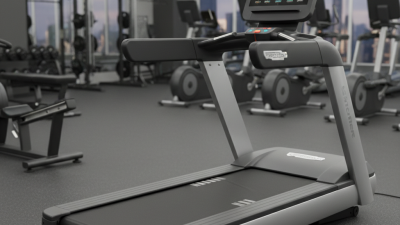
10 Essential Tips for Choosing the Best Commercial Treadmill for Your Gym?
Selecting the right commercial treadmill for your gym can significantly impact your business. With the commercial fitness equipment market projected to reach $5.5 billion by 2028, it’s vital to make informed choices. According to fitness industry expert Tom Grayson, "Investing in quality treadmills can elevate your gym’s reputation and member satisfaction." This reinforces the crucial role that treadmills play in gym facilities.
When considering a commercial treadmill, factors like durability, technology, and warranty are paramount. Research shows that 70% of gym members prioritize equipment quality when joining a fitness center. A treadmill's features can either enhance user experience or detract from it. Many gym owners overlook the importance of user feedback in equipment selection.
There is often a tendency to focus solely on price, but this can lead to regrettable decisions. Choosing high-performance commercial treadmills can reduce maintenance costs and increase member retention. Ponder this: Does your current equipment reflect the commitment to quality and excellence that members expect? Striking the right balance between cost and quality is essential for long-term success.

Factors to Consider Before Purchasing a Commercial Treadmill
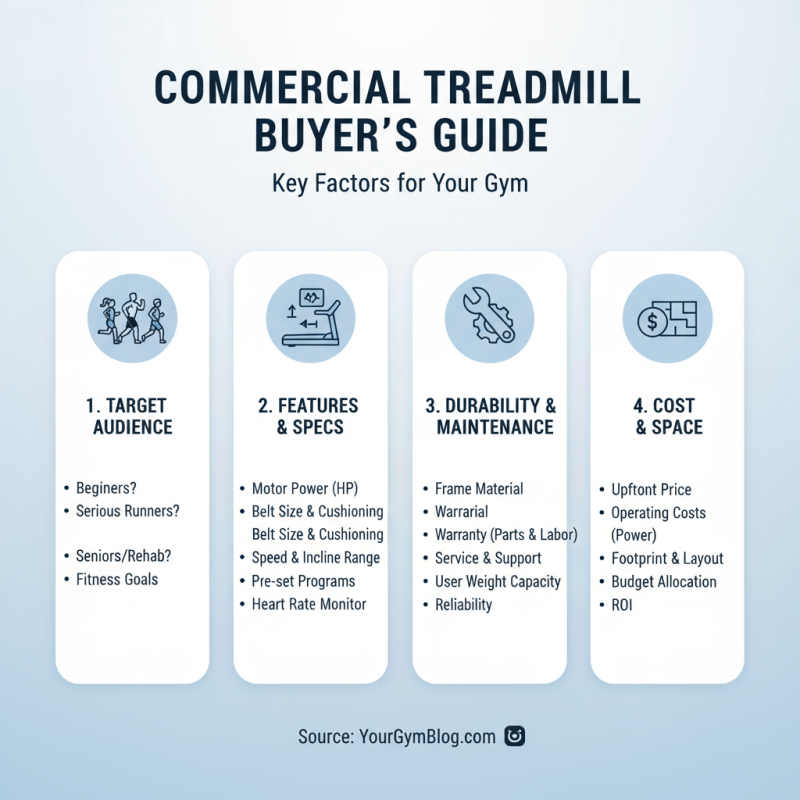
Choosing the right commercial treadmill for your gym is crucial. It's not just about the price or the look. Several important factors can impact your decision. Understand your target customer base. Are they beginners, serious runners, or older adults? This will influence your treadmill selection.
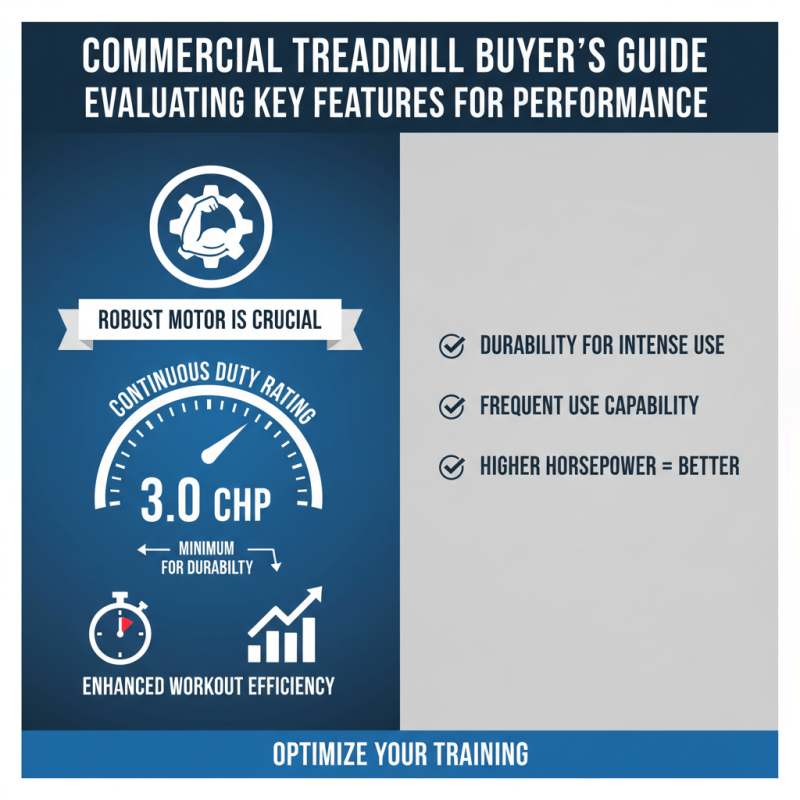
The treadmill's durability is essential. Commercial use demands machines that can withstand heavy daily usage. Look for models built with strong frames and robust motors. Machines with higher weight capacity tend to last longer. Try to visualize the wear and tear over time. How often do you expect it to be used? Also, consider the maintenance requirements. Some treadmills may require frequent repairs, which could be an unexpected cost.
Think about the features. Choose treadmills that offer various workout programs and user-friendly interfaces. Customers appreciate machines with built-in screens and heart rate monitors. These enhance the workout experience. However, simplicity is also key. Avoid overly complicated machines that can frustrate users. Always weigh the benefits against the potential drawbacks. It’s essential to find a balance that aligns with your gym's vision.
Assessing the Space Requirements for Gym Equipment
When selecting a commercial treadmill for your gym, assessing space requirements is crucial. The American Council on Exercise (ACE) suggests allowing at least 30 square feet per treadmill. This includes the machine's footprint and surrounding space for user safety. A cramped environment may deter members from using equipment. It's essential to create an inviting workout area.
Consider the ceiling height too. Treadmills often require more vertical room than other equipment. A machine that provides ample headspace can enhance user comfort. Based on industry reports, more than 20% of gym-goers will avoid low-ceiling areas due to discomfort. Evaluate your gym layout to ensure that user circulation isn't hindered by equipment placement.
Flexibility is vital in equipment selection. If future expansion is a possibility, consider machines that are easy to rearrange. Also, ensure access to electrical outlets. Lack of accessible power can limit treadmill features and functionality. A poorly planned space may lead to challenges in user experience and member satisfaction. Addressing these elements can help optimize your gym design.
10 Essential Tips for Choosing the Best Commercial Treadmill for Your Gym
| Tip Number |
Tip Description |
Space Requirement (sq ft) |
Weight Capacity (lbs) |
Warranty (years) |
| 1 |
Evaluate the available space for your treadmill placement. |
30 |
300 |
2 |
| 2 |
Consider the treadmill's size and footprint. |
25 |
350 |
3 |
| 3 |
Select a model with a strong motor for durability. |
35 |
400 |
5 |
| 4 |
Look for adjustable incline options for variety. |
30 |
350 |
3 |
| 5 |
Ensure the treadmill has a good cushioning system. |
30 |
300 |
2 |
| 6 |
Assess the console features and user interface. |
25 |
350 |
3 |
| 7 |
Check for available safety features. |
30 |
300 |
2 |
| 8 |
Choose a model with extra features like heart rate monitoring. |
30 |
350 |
4 |
| 9 |
Assess the brand's customer service reputation. |
25 |
300 |
2 |
| 10 |
Compare warranties and maintenance options. |
30 |
400 |
5 |
Understanding the Different Types of Commercial Treadmills
When selecting a commercial treadmill, it's important to understand the different types available. Treadmills generally fall into two main categories: flat-belt and incline options. Flat-belt treadmills are designed for basic running and walking. They often have a range of speeds but may lack advanced features. On the other hand, incline treadmills simulate outdoor running conditions more accurately. They can be adjusted to various inclines, making workouts more challenging.
According to the 2022 International Health, Racquet & Sportsclub Association report, the demand for incline treadmills has increased significantly. Around 35% of gyms now prioritize equipment that offers versatility in workout intensity. Many fitness professionals recommend incline treadmills for their ability to engage more muscle groups. They encourage a more effective cardiovascular workout but may require more maintenance.
However, purchasing a treadmill is not solely about features. It’s essential to consider user experience and wear and tear. Equipment durability is often overestimated, which can lead to unexpected costs. Often, gyms overlook how frequent use affects treadmill life. Understanding these nuances ensures informed decisions. Ultimately, the right choice balances the needs of gym members and the operational capacity of the facility.
Comparison of Different Types of Commercial Treadmills
Comparing Price vs. Value: Making an Informed Investment
When selecting a commercial treadmill, price and value are crucial. A common misconception is that higher prices guarantee superior quality. However, a study by the Commercial Fitness Association suggests that treadmills in the mid-price range often provide better long-term returns. They may lack flashy features but are built to endure heavy usage.
Investing in equipment should consider overall value. Maintenance costs can add up. A report from the Institute of Sports Science highlights that a treadmill with a robust warranty and service support can reduce long-term expenses by up to 30%. Cheaper models might need repairs sooner, negating any initial savings.
It's essential to think critically about what a treadmill offers. Features like inclines, speed options, and user interfaces are standard. Yet, durability often makes the difference in busy gyms. A recent fitness industry analysis found that treadmills lasting beyond seven years tend to have a lower replacement cost. Balancing upfront price with expected longevity is vital in making an informed decision.



 1Durch die gruppenweite Einführung und Harmonisierung unseres integrierten Managementsystems (IMS) werden alle bestehenden Unternehmens-, Qualitäts-, Umwelt- und Energiepolitiken durch diese Unternehmenspolitik ersetzt. Der Slogan „Textil hat Zukunft – auch in De